An Album Born from Personal Reflection

Post the Animals tour of 1977, Roger Waters commenced crafting two pieces that would vie for the position of Pink Floyd's next star project. 'The Wall' emerged the victor for the band to record in 1979, edging out what was considered the more intimate of the two works, 'The Pros and Cons of HitchHiking'. Guitarist David Gilmour remarked on both as nascent concepts that required extensive work, indistinguishable from each other at the time.
Choice and Consequence: The Solo Path
While 'The Wall' became a landmark Pink Floyd album, 'The Pros and Cons of HitchHiking' marked Waters' venture into solo artistry post 'The Final Cut'. Between February and December of 1983, London's Olympic Studios, Eel Pie Studios, and Waters' own Billiard Room resonated with the sounds of the album's inception. As a 42-minute exploration of the dream state, Waters embedded within the album his subconscious contemplations on monogamous commitment against the yearning for freedom.
The Struggles of a Solo Artist
The solo journey wasn't without stumbling blocks. MTV's insufficient promotion, attributed to Waters' refusal to discuss Pink Floyd, greatly impeded the album’s publicity. This indifference from the media giant not only diminished exposure for the titular single but also paved the way for more airtime for Gilmour-led Pink Floyd in the later years, especially during 1987's band schism.
Public Image and Reception: A Stark Contrast
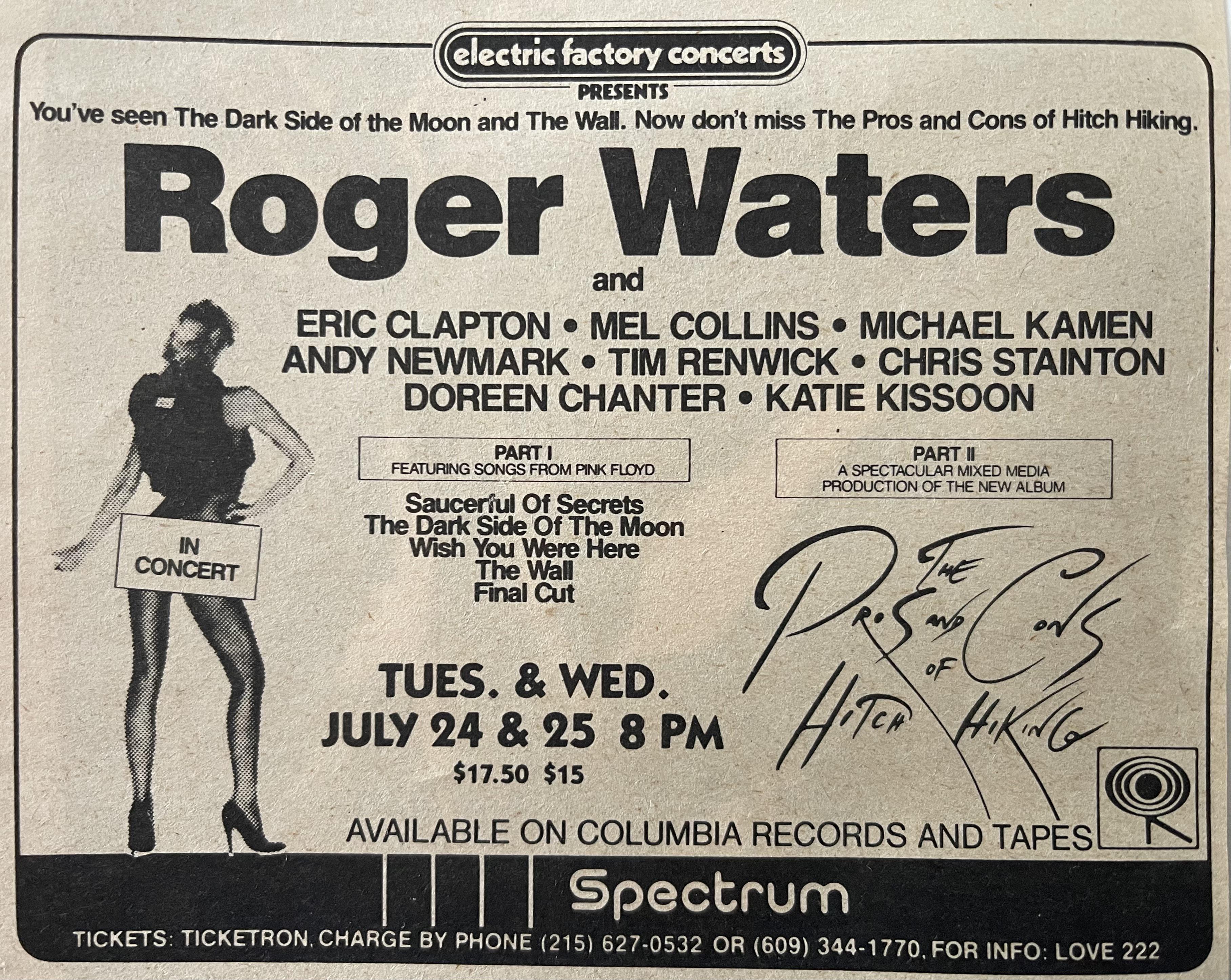
Waters soon realized that his association with Pink Floyd was not as publicly recognized as he'd anticipated. Simultaneously, the album's upfront sexual themes, personified by the controversial naked hitchhiker on the cover—model Linzi Drew—ignited backlash, leading to censorship and protest. This unexpected whirlwind of attention certainly brought the album into the limelight, albeit not in the manner Waters would have liked.
The Dream Team Behind the Music
Waters' second wife's connection to Eric Clapton led to Clapton's pivotal role in the album and subsequent tour. Despite reservations from his inner circle, Clapton saw the allure of a more anonymous role in another's ensemble. Yet, by the tour’s end, the rigidity and the constraints of performance had left its mark, leaving Clapton yearning for change—an echo of Waters’ own journey.
Bringing the Dream to the Stage
Staged like a dream set within a bedroom, the live performances were designed by a team including Mark Fisher and Jonathon Park, enhanced by film by Nicholas Roeg and Bernard Rose, and animated by Gerald Scarfe. Contrary to popular belief, the show’s complexity lay not in its set but rather in synchronizing the triple projectors that dictated the audio and visual tempo for the performers.
Financial Hurdles and Unprecedented Moves

Despite initial positive reactions in the USA, the tour was costly, with Waters personally absorbing a significant financial loss. His gamble to innovate with holophonic sound at a special New York show reflected Waters' continuing commitment to pushing boundaries, regardless of personal cost.
The Pros And Cons of Staying Solo
Though the possibility of adapting the concept into a film was floated in the late 80s, and further collaborations with Clapton on projects like 'The Hit' took place, it nonetheless became clear that Waters' successful solo path was not guaranteed. Especially as he parted ways with Pink Floyd, the road ahead was uncertain, littered with the pros and cons of artistic autonomy.
Traveling Through the Legacy of 'The Pros and Cons of HitchHiking'
The album's thematic exploration of travel and freedom resonates with modern-day voyagers seeking their path. Similarly to the dreamscapes in Waters’ album, travelers today often weigh the comforts of familiar lodgings against the allure of enigmatic destinations and the untrodden road. Whether tucked in a well-appointed hotel room or seeking solace under the stars, the album's narration of human wanderlust and internal contemplation provides a poignant soundtrack for journeyers everywhere.
London
- Premier Inn London
- Leonardo Royal London Tower Bridge
- Hyatt Place London City East
- Cheval Three Quays
- Nobu Shoreditch
- President Hotel London
- Marriott Canary Wharf
- St Giles Hotel London
- Park Grand Paddington Court
- Tower Suites By Blue Orchid
- Safestay Elephant And Castle
- Sloane Square Hotel
- Canopy By Hilton London City
- Park Hyatt London
- Citizenm Shoreditch
- Premier Inn Tower Bridge
- Lancaster Gate Hotel
- Mowbray Court Hotel
- Premier Inn Earls Court
- Novotel London Waterloo
- Native Bankside
- Hampton By Hilton London Waterloo
- Hilton Paddington
- Westin London City
- Double Tree Hilton Tower Of London
- Lalit London
- The Tower Hotel London
- Moxy Excel
- Z Hotel
- Thistle Hotel Barbican
- Novotel Paddington
- Royal Garden Hotel
- Royal Lancaster London
- The Exhibitionist Hotel
- St Martins Lane Hotel
- Rest Up London
- Victory House Leicester Square
- Smart Camden Inn Hostel
- Holiday Inn Whitechapel
- Holiday Inn Hammersmith
- The Hari
- Park Plaza Westminster Bridge London
- Sea Containers Hotel
- St Athans Hotel
- Comfort Inn Edgware Road
- Mentone Hotel
- Blandford Hotel
- The Prince Akatoki London
- Wellington Hotel By Blue Orchid
- Conrad St James
- Single Room London
- Cheap London Hotels
- Family Room Hotel London
- Spa Weekend London
- Pet Friendly Accommodation London
- London Hotels Romantic Packages
- Bed And Breakfast Central London
- Victoria Hostel
- Unique Places To Stay London
- Hotels London City Centre
- Luxury Spa Breaks London
- Hotel Apartments London
- Guest House In Central London
- London Hotels 5 Star
- Four Stars Hotel Sussex Gardens
- Vacation Rentals London England
- London Hotels Expensive